IntelliTasks for software teams

Plan sprints that fit and ship releases with confidence

Check sprint scope against team capacity before you commit, triage bugs against response targets, and follow each release on the roadmap.

Start free trial

14-day trial. No card required.

  • Capacity in person-days
  • Unfinished work is carried over
  • Sprint fit before you commit
Use cases

How software teams use IntelliTasks

  • Sprint planning

    Set the sprint dates, enter vacation days and compare the estimated effort of the selected stories with capacity in person-days.

    See how it works: Sprint planning
  • Bug triage

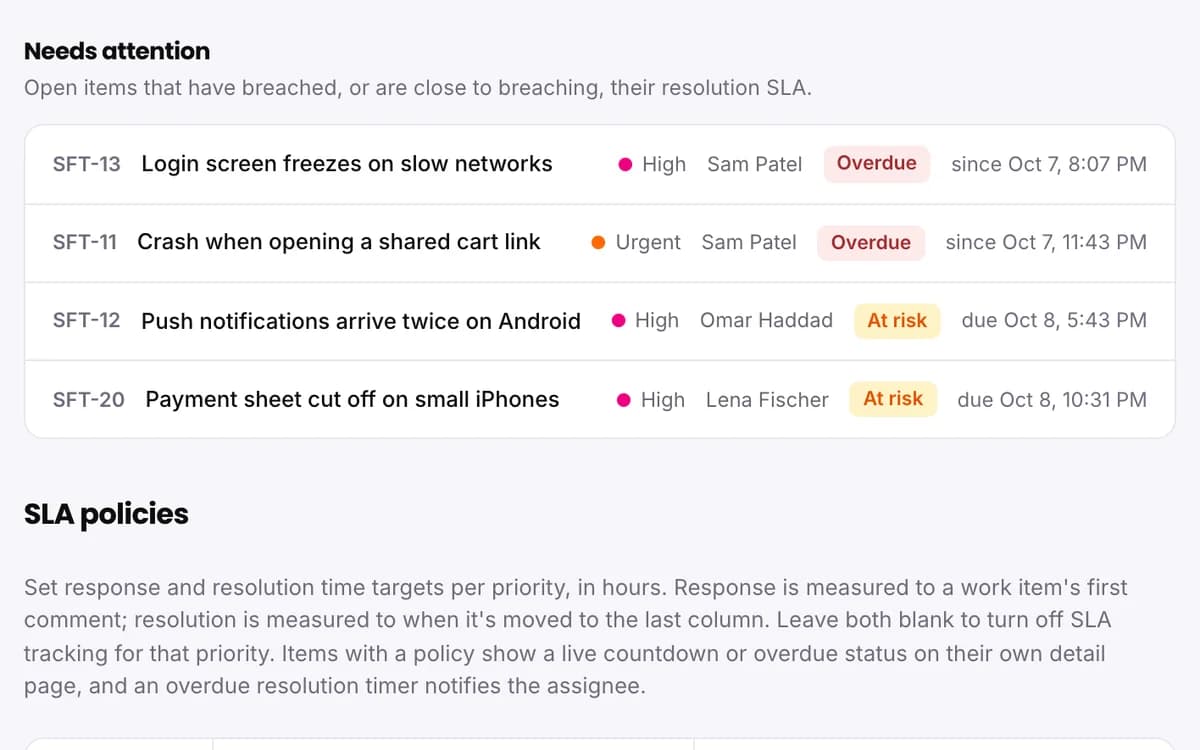
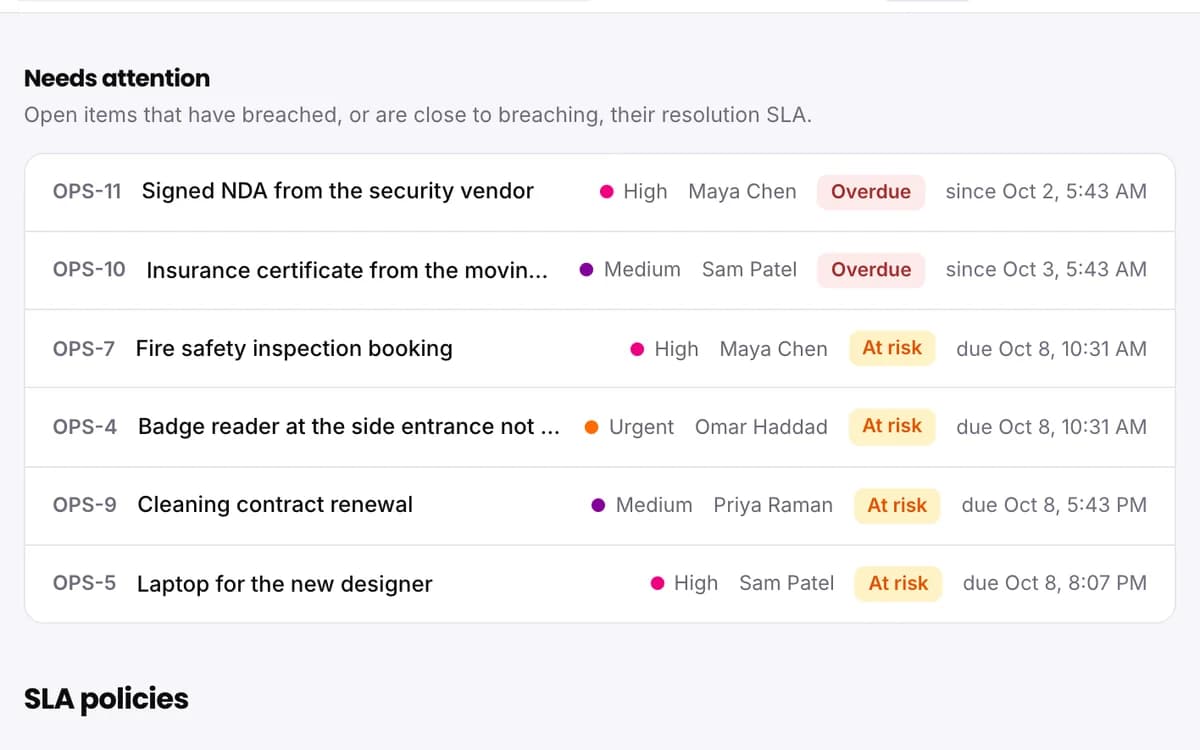
    Give each bug a priority, a response target and a resolution target, and see which ones are at risk on the Needs attention list.

    See how it works: Bug triage
  • Releases

    Follow release epics against sprints on the roadmap, and bring existing work across with Import from Jira and Trello.

    See how it works: Releases
See it work

Three moments from a software team's week

Short clips recorded in IntelliTasks with sample data. The board columns are a suggestion: they can be renamed and reordered to match how your team works.

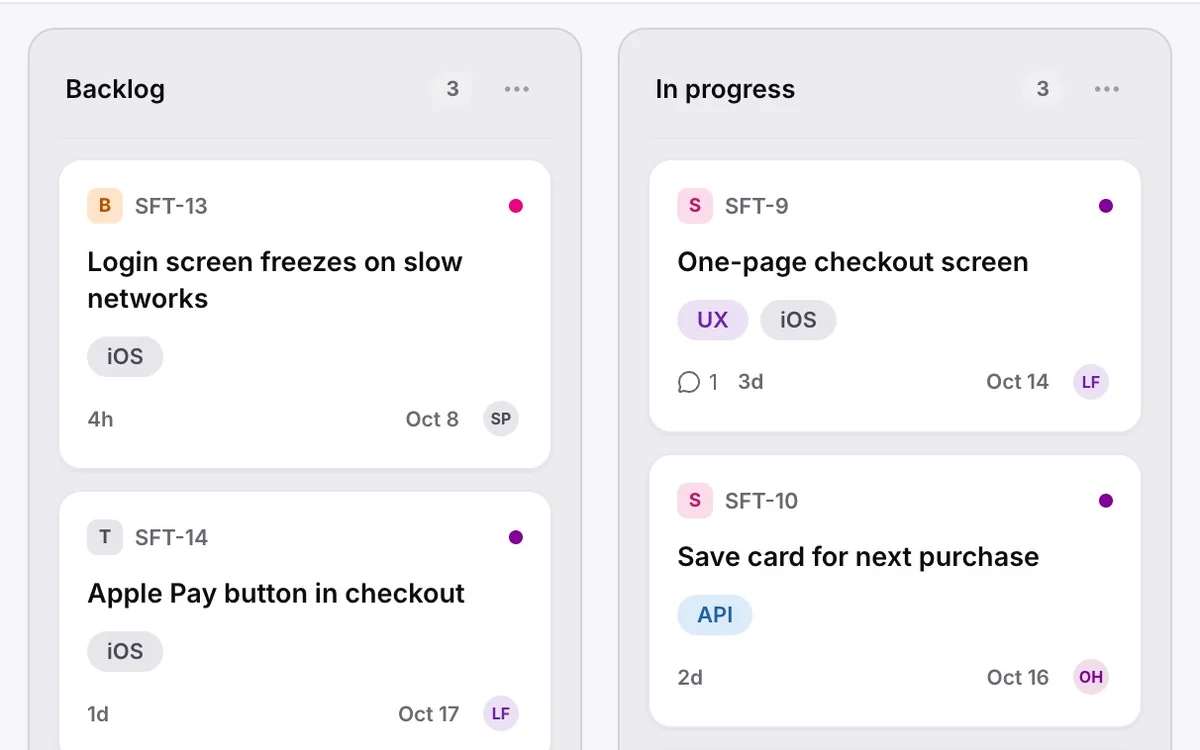
An Apple Pay button task on the active sprint board is dragged from Backlog through In progress and In review to Done.
  1. Backlog
  2. In progress
  3. In review
  4. Done

Sprint planning with a capacity check

The sprint wizard takes three steps: dates with weekends excluded, members and vacation days, then the stories to include. The sprint fit panel compares estimated effort with capacity before the sprint starts.

  • Capacity in person-days per sprint
  • Sprint fit panel before you commit
  • Carried over items shown when a sprint closes
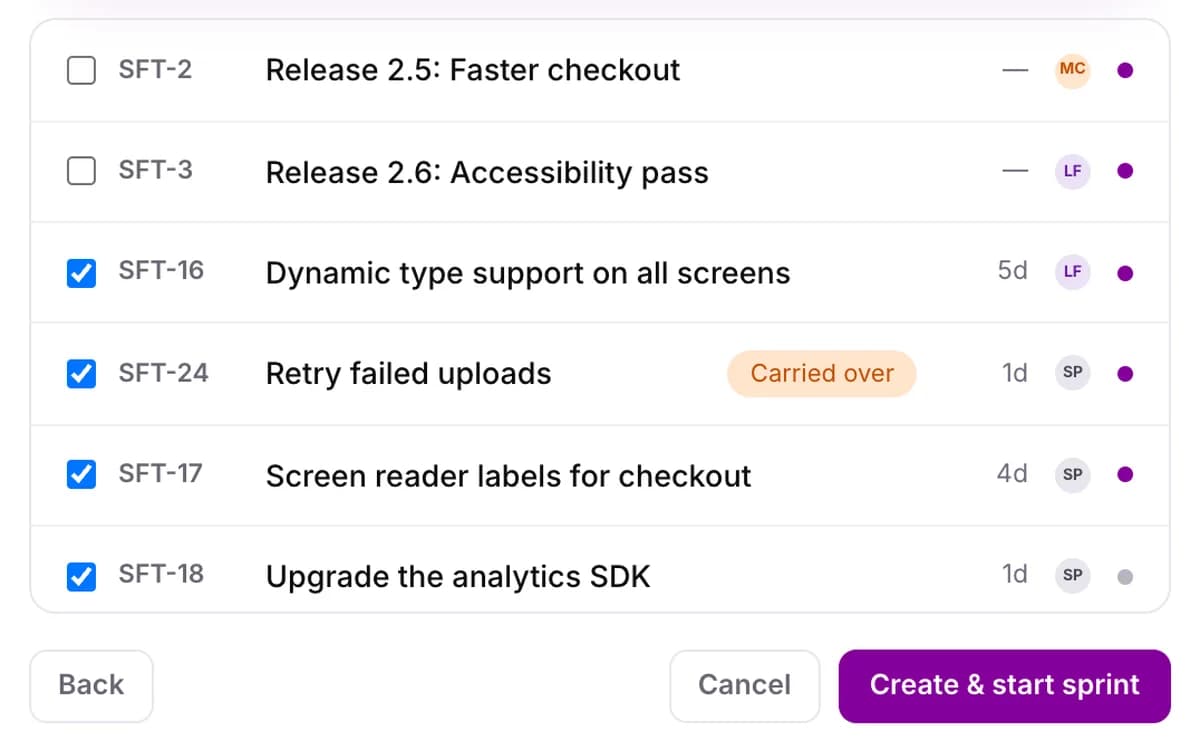
Close-up of step three of the sprint wizard: the candidate stories ticked for the sprint with their estimates and owners, one of them carried over from an earlier sprint.

Triage bugs against response targets

Set a response target and a resolution target in hours for each priority. An item is shown as at risk at 75% of its window, and the assignee is notified when the resolution window reaches that point and again when it is missed.

  • Targets per priority: Low, Medium, High and Urgent
  • At-risk alerts at 75% of the resolution window
  • Needs attention list at the top of the SLA page
Close-up of the Needs attention list on the SLA page of the mobile release: bugs marked Overdue or At risk with their priority, assignee and due time.

Track releases on the roadmap

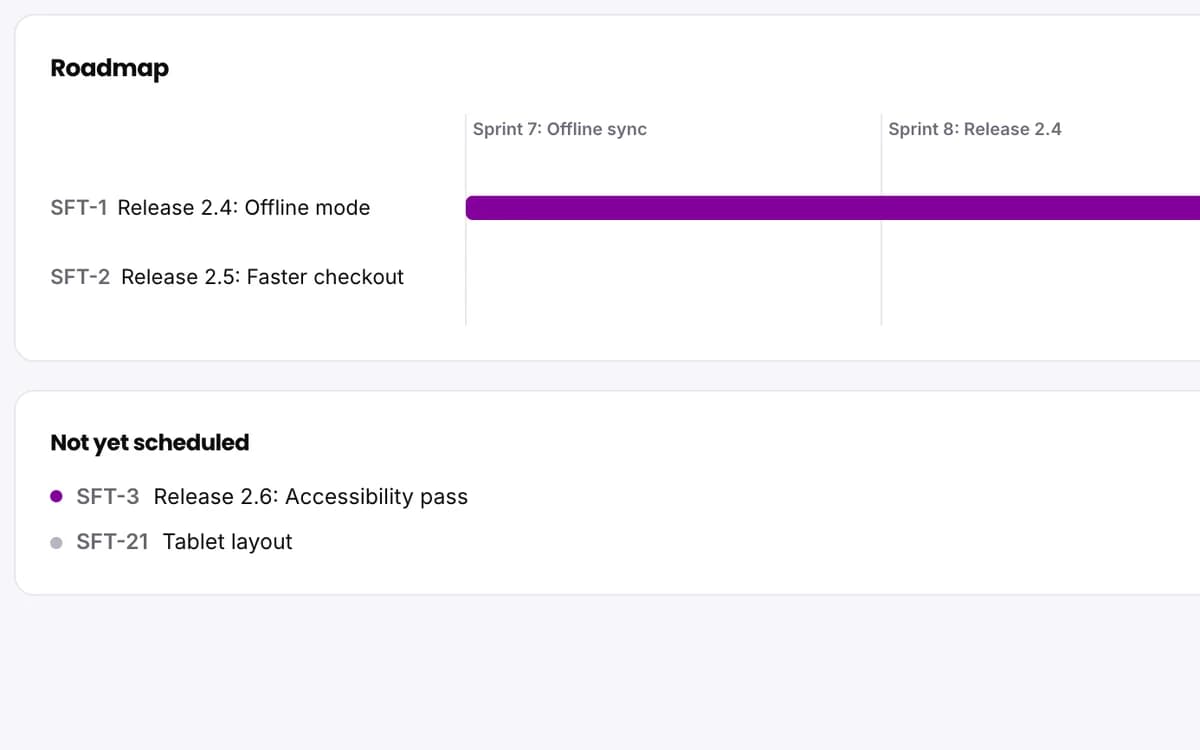
The roadmap shows each release epic against the sprints its stories are planned in, with progress shading from finished work. Epics with no stories in a sprint yet are listed as not yet scheduled.

  • Read-only roadmap of epics against sprints
  • Epics with nothing planned yet listed as not yet scheduled
  • Import from Jira and Trello for existing work
Close-up of the roadmap: release epics against the sprints with progress shading on the bars, and the epics not yet scheduled listed below.
Included

Everything your team needs, already built

  • Sprints

    A three-step wizard with working days, member capacity and a sprint fit check.

  • Backlog

    Everything outside the active sprint, grouped by status.

  • Roadmap

    A read-only timeline of epics against sprints.

  • SLA

    Response and resolution targets per priority, with at-risk and breach alerts.

  • AI assist

    Drafts, summaries and epic breakdowns that you review before anything is applied.

  • REST API

    A public API with scoped tokens for projects, work items, comments and sprints.

Getting started

Get set up in four steps

  1. Create a project

    Choose a short key, such as SFT, and keep Sprint-based as the workflow mode.

  2. Rename the columns

    Set the board columns to Backlog, In progress, In review and Done.

  3. Invite the team

    Add engineers and the product owner by email, and set the project role for each.

  4. Start the first sprint

    Run the sprint wizard, check the sprint fit panel and start the sprint when the scope matches capacity.

Other teams

One workspace for every team

Marketing

Plan campaigns as epics, move content across a board, keep briefs and assets beside the work, and show leadership where each goal stands.

See how marketing works

Sales

Track the pipeline on a board, see which accounts have gone quiet, and review the week with numbers instead of a long meeting.

See how sales works

Operations

Turn incoming requests into work items with response targets, write procedures where the team works, and keep a searchable record of who did what.

See how operations works
Questions

Frequently asked questions

Does IntelliTasks include sprint planning?

Yes. The sprint wizard counts working days, takes member capacity and vacation days into account, and shows the sprint fit before the sprint starts.

Can I use IntelliTasks without sprints?

Yes. A project can run in Board-only mode, which is a kanban board without sprints, and you can switch modes at any time.

What happens to unfinished work at the end of a sprint?

It is carried over to the next sprint and is not dropped without notice.

Can I move my existing backlog across?

Yes, if it is in Jira or Trello. Owners and admins can import a Jira CSV or JSON export or a Trello JSON export, and statuses are mapped to columns.

Find out what has been waiting.

Invite your team and see your first Waiting too long list in minutes.

Start free trial

14-day trial. No card required.

Book a walkthrough

See IntelliTasks on your own work with our team. Leave your details and we will contact you to arrange a time.

We use your details only to arrange this walkthrough.